
Shopping Cart
- Willy L.J.
- Classic Vehicle Interior Restoration
- 0 likes
- 399 views
- 0 comments
- dashboard trim, interior styling, 3D domed trim, buyer guide, education, automotive
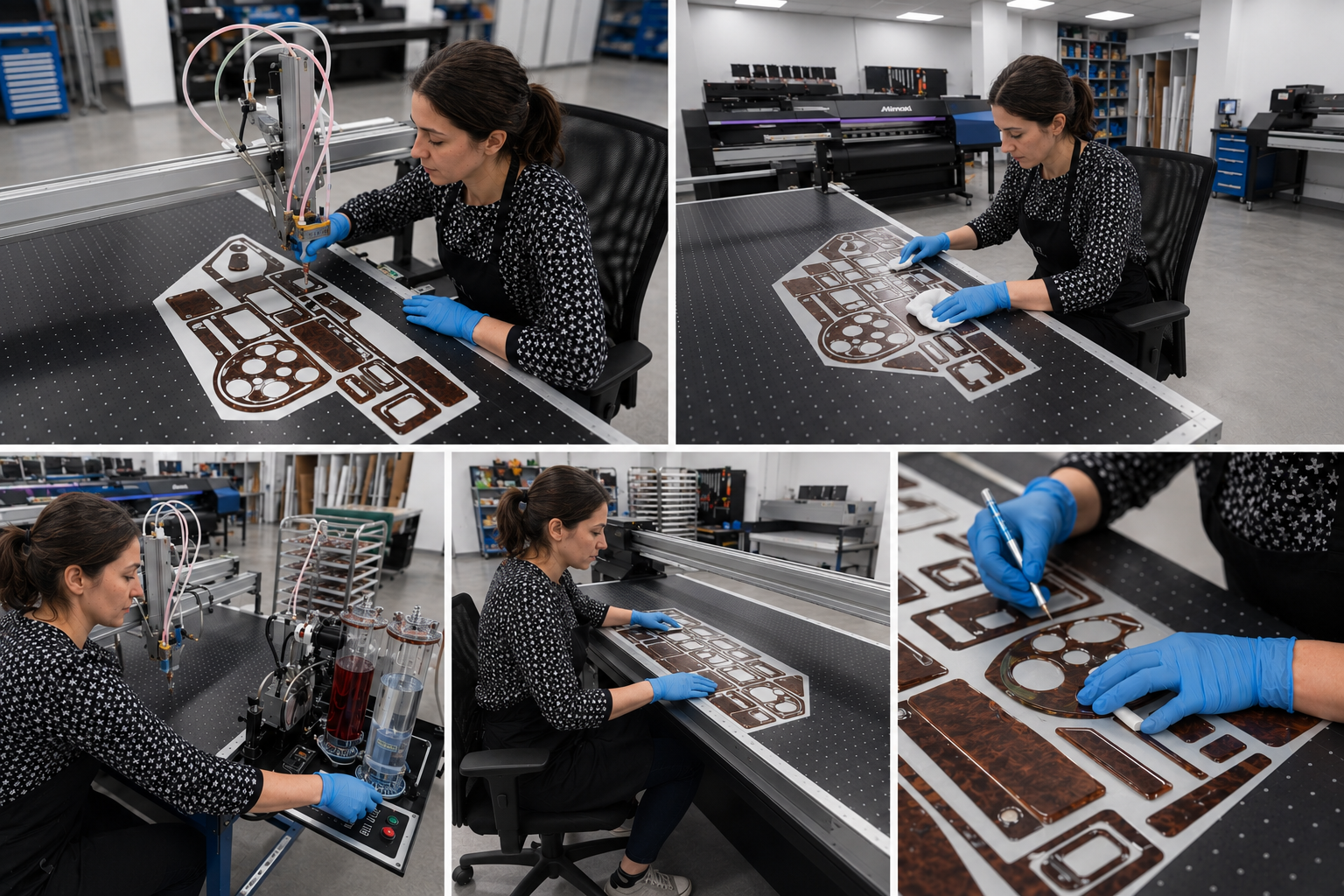
PU Resin Mixing and Application Guide for Automotive Trim
Important disclaimer: This information is educational only. It is not a substitute for the resin manufacturer's Safety Data Sheet (SDS), technical data sheet, local regulations, workplace procedures or instructor-led safety training.
PU resin doming is used to create a clear, raised protective layer over decorative automotive trim parts. The final result depends on correct mixing, clean surfaces, controlled dosing and suitable curing conditions.
1. What PU Resin Doming Is
PU resin doming means applying a transparent polyurethane layer over a printed, cut or decorative surface. The resin flows to the edge of the part and cures into a smooth 3D coating.
2. Where PU Resin Is Used In Automotive Interior Trim
PU resin can be used for dashboard trim inserts, center console details, door panel accents, interior badges, decorative panels and custom restoration parts. It is intended for decorative components, not structural or safety-critical vehicle parts.
3. Manual Mixing And Application
Manual application is common for prototypes, small batches and training. Resin and hardener must be measured according to the supplier's instructions, mixed slowly, applied on a level surface and protected from dust during curing.
4. Automatic 2K Mixing And Dosing
Automatic 2K systems use pumps, controlled dosing and static mixers to combine resin and hardener. They can improve repeatability, reduce operator variation and help control edge flow, but they still require calibration, cleaning and trained operators.
5. Italian PU Resin Systems Used In Professional Production
CockpitDekor / AutoDekor has experience using Italian polyurethane resin systems for 3D domed automotive interior trim. The exact system must always be selected according to the substrate, desired finish, technical data sheet and SDS.
6. Surface Preparation Before Doming
Clean preparation is critical. Dust, fingerprints, moisture, silicone, oil or uncured print layers can cause poor adhesion or visible defects. Test parts should be used before production whenever the surface or resin system changes.
7. Static Mixers, Dosing Ratio, Pot Life And Curing
Static mixers combine the two components inside automatic systems. The dosing ratio must follow supplier instructions. Pot life is the usable working time after mixing. Curing depends on resin chemistry, part thickness, temperature, humidity and airflow.
8. Common Defects And Causes
| Defect | Common causes | Prevention ideas |
|---|---|---|
| Bubbles | Fast mixing, trapped air, porous surface, unsuitable mixer | Mix slowly, control temperature, test the substrate |
| Poor adhesion | Dust, oil, moisture, incompatible coating | Clean carefully and test compatibility |
| Yellowing | Unsuitable resin, UV exposure, heat, wrong storage | Use suitable systems and follow storage rules |
| Soft cure | Wrong ratio, poor mixing, expired material, low temperature | Verify ratio, shelf life and workshop temperature |
| Uneven edge flow | Unlevel table, excessive dose, inconsistent viscosity | Level parts and control the dose |
| Contamination | Dust, fibers, dirty tools, silicone or oil exposure | Use clean tools and protect parts during cure |
9. Workshop Safety Basics
PU resin systems should be treated as chemical materials. Basic precautions include suitable gloves, ventilation, eye protection, SDS review, spill handling procedures, clear labelling and temperature/humidity control.
10. Safety Documentation And Compliance Considerations
Before using any resin system, review the SDS, technical data sheet, PPE requirements, ventilation needs, storage rules and disposal instructions. California-related safety/labelling considerations may apply where applicable. CockpitDekor / AutoDekor does not claim official California certification unless specific documents are provided and verified.
11. Manual Vs Automatic Application Comparison
| Topic | Manual application | Automatic 2K application |
|---|---|---|
| Best use | Small batches, prototypes, training | Repeatable production |
| Ratio control | Operator measurement | Calibrated equipment |
| Training focus | Measuring, mixing, visual inspection | Setup, calibration, mixer selection |
| Common risks | Bubbles, ratio errors, contamination | Blocked mixers, wrong calibration, poor cleaning |
12. Educational Use For Trim, Upholstery And Restoration Training
This topic can support automotive upholstery, restoration, detailing, coatings and workshop safety training. Students can compare methods, review SDS sections and diagnose sample defects under instructor supervision.
13. About CockpitDekor / AutoDekor Experience With 3D Domed Interior Trim
CockpitDekor / AutoDekor manufactures vehicle-specific interior trim components and 3D domed decorative panels. Production experience includes surface preparation, controlled dosing, manual and automatic resin application, curing control and visual inspection.
14. Contact For Technical Questions
For technical questions about this educational resource, contact CockpitDekor / AutoDekor through the contact page. Please include the training context, material type and question topic.

Comments (0)