
Shopping Cart
Dashboard Trim Kit Material Guide
Material Guides
Choosing the right dashboard trim kit material is an important part of creating the interior style you want. A dark burl wood finish can give the cabin a classic luxury appearance, carbon fibre can create a sportier technical look, and aluminium can make the dashboard feel clean, modern and OEM-inspired.
This guide compares burl wood dashboard trim with carbon fibre trim, explains high-gloss polyurethane 3D doming, compares real wood veneer with UV printed wood effect trim, and helps you choose between dark walnut, light burl wood and aluminium interior trim.
Material Guide Contents
- Dashboard trim material overview
- Burl wood dashboard trim vs carbon fibre trim
- High-gloss polyurethane doming for dashboard trim kits
- Real wood veneer vs UV printed wood effect trim
- Dark walnut, light burl wood and aluminium interior trim comparison
- Popular finish options for dashboard trim kits
- How to choose a finish by interior colour
- How to choose a finish by vehicle style
- Care and cleaning for high-gloss trim surfaces
- Final material selection checklist
- Frequently asked questions
Material Finish Gallery
Real dashboard trim finish examples uploaded for CockpitDekor CMS.
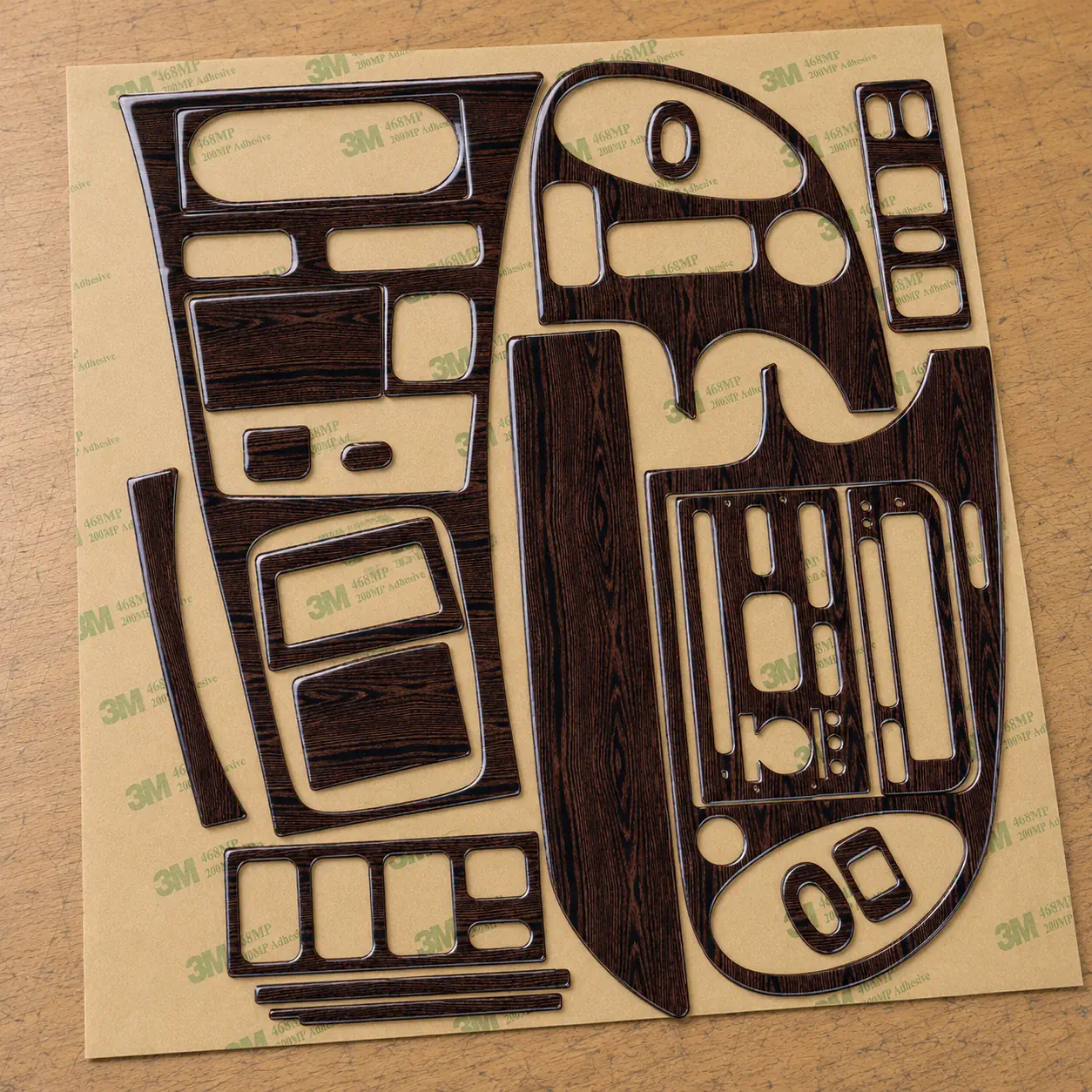
Dark wood grain
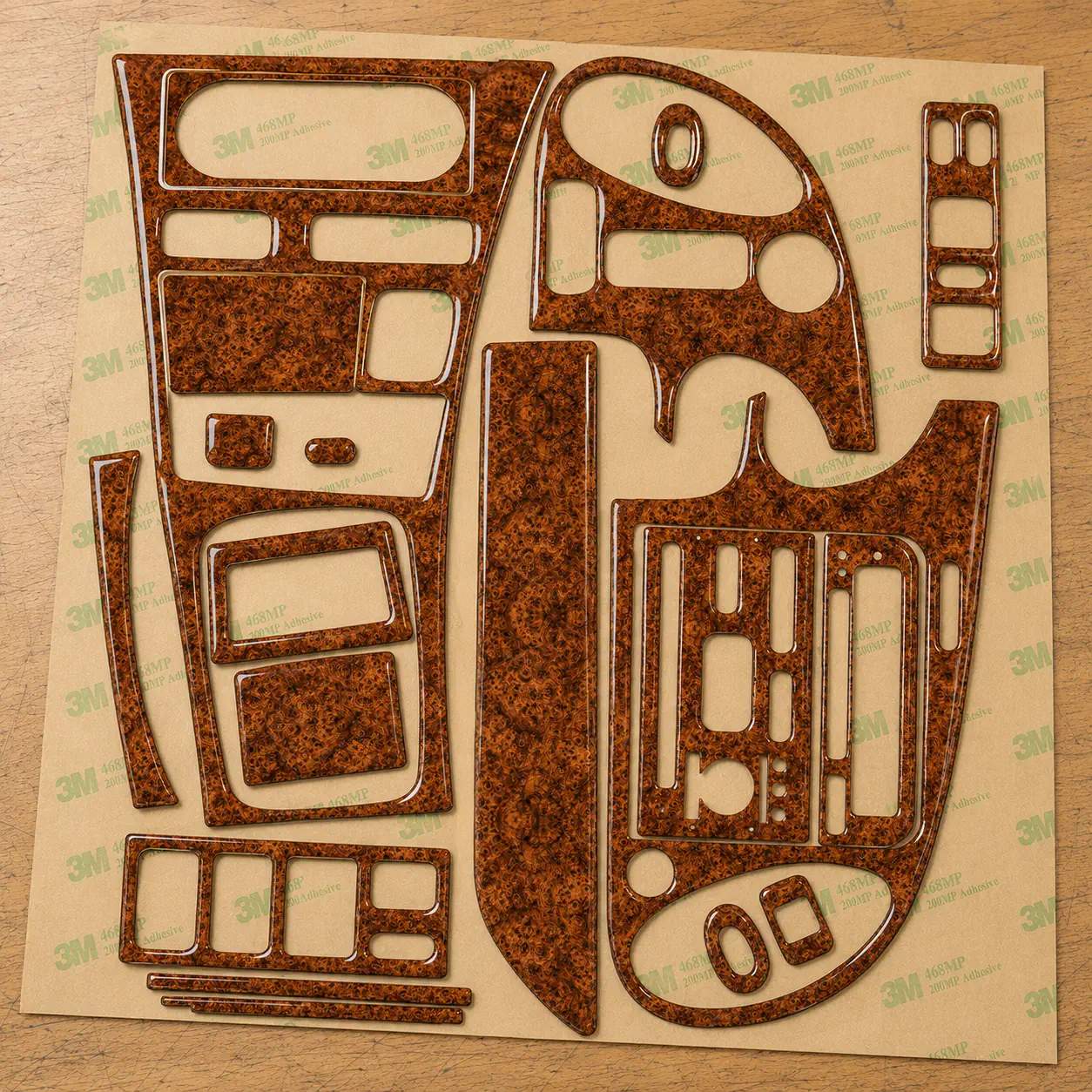
Warm burl wood
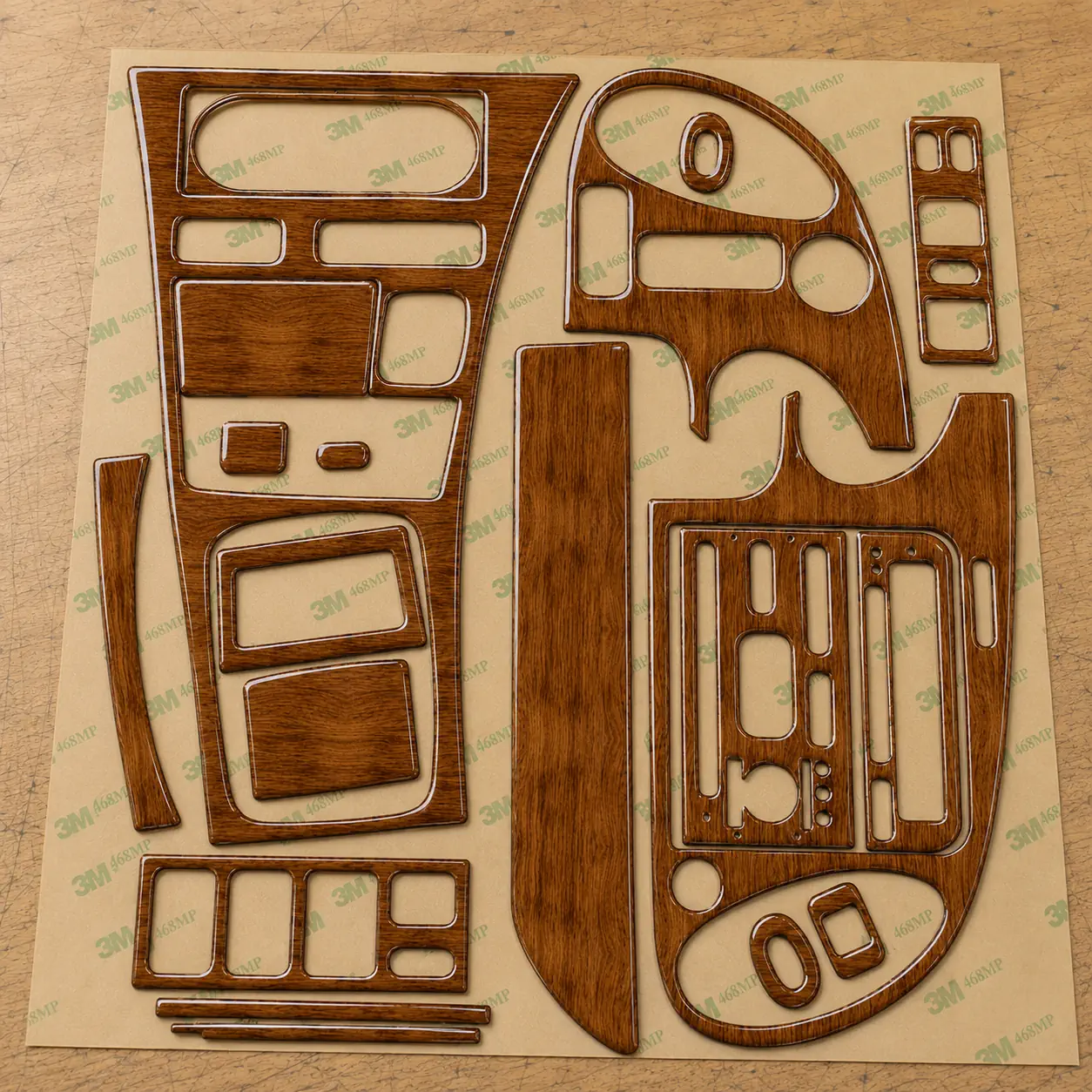
Classic wood finish
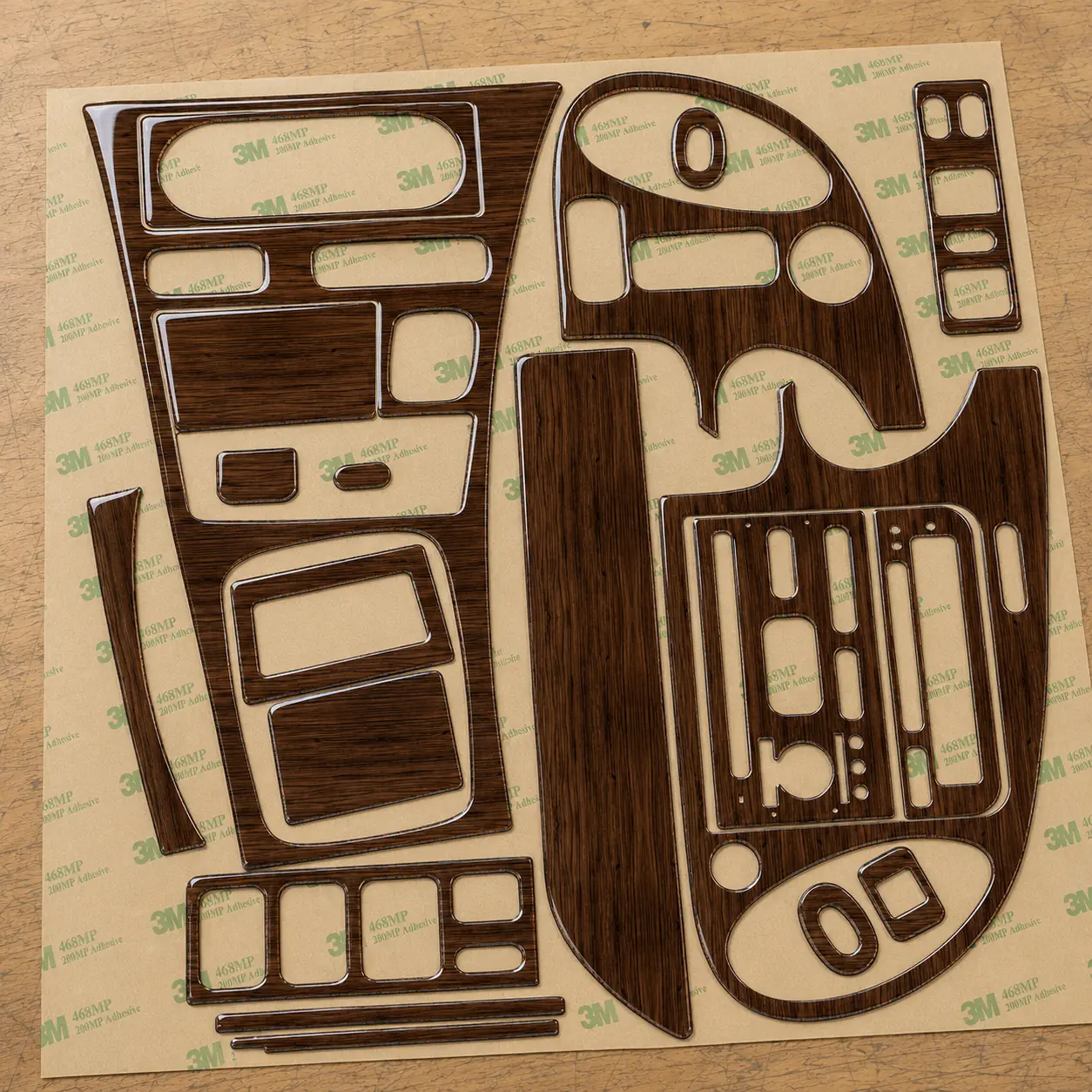
Light golden wood
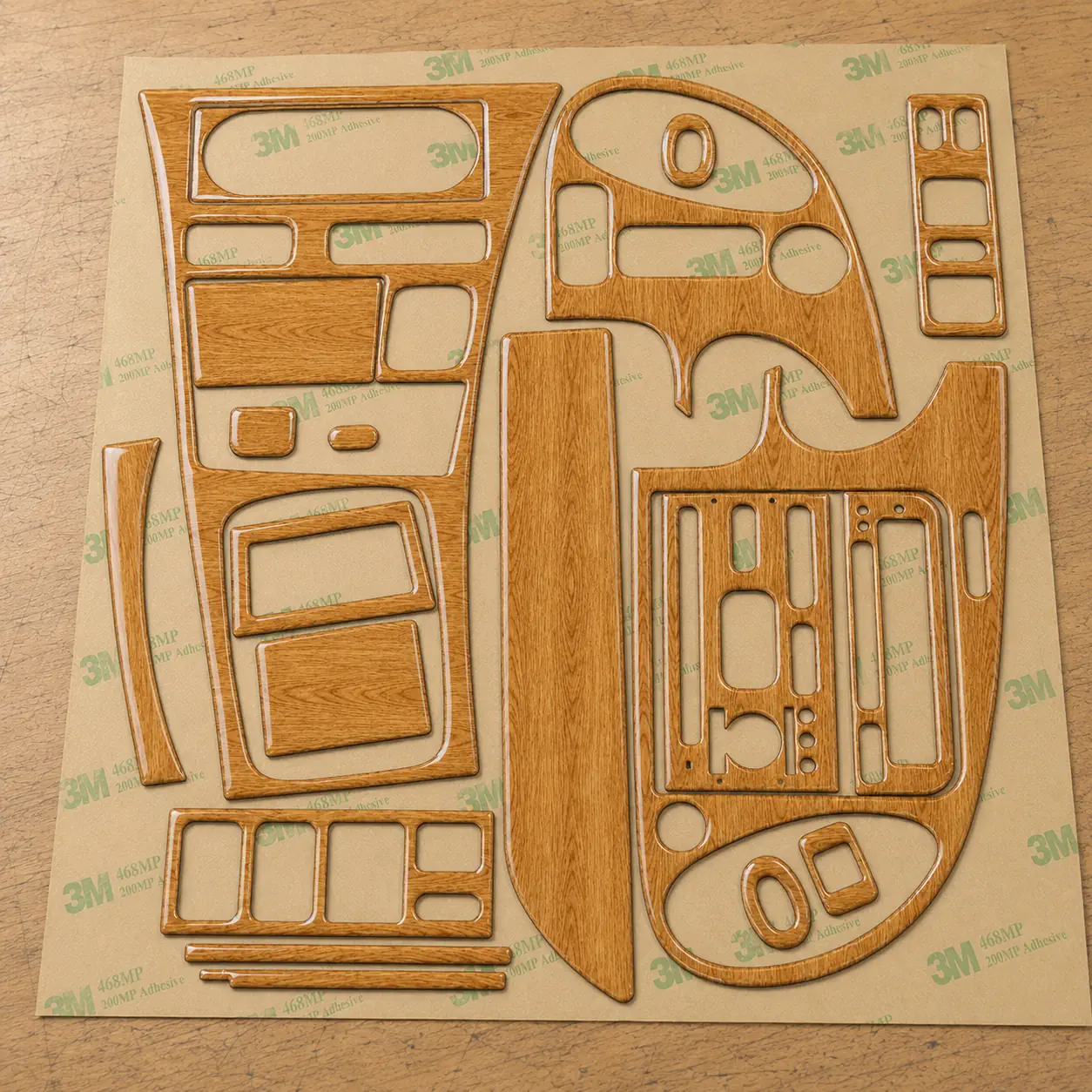
Brown burl pattern
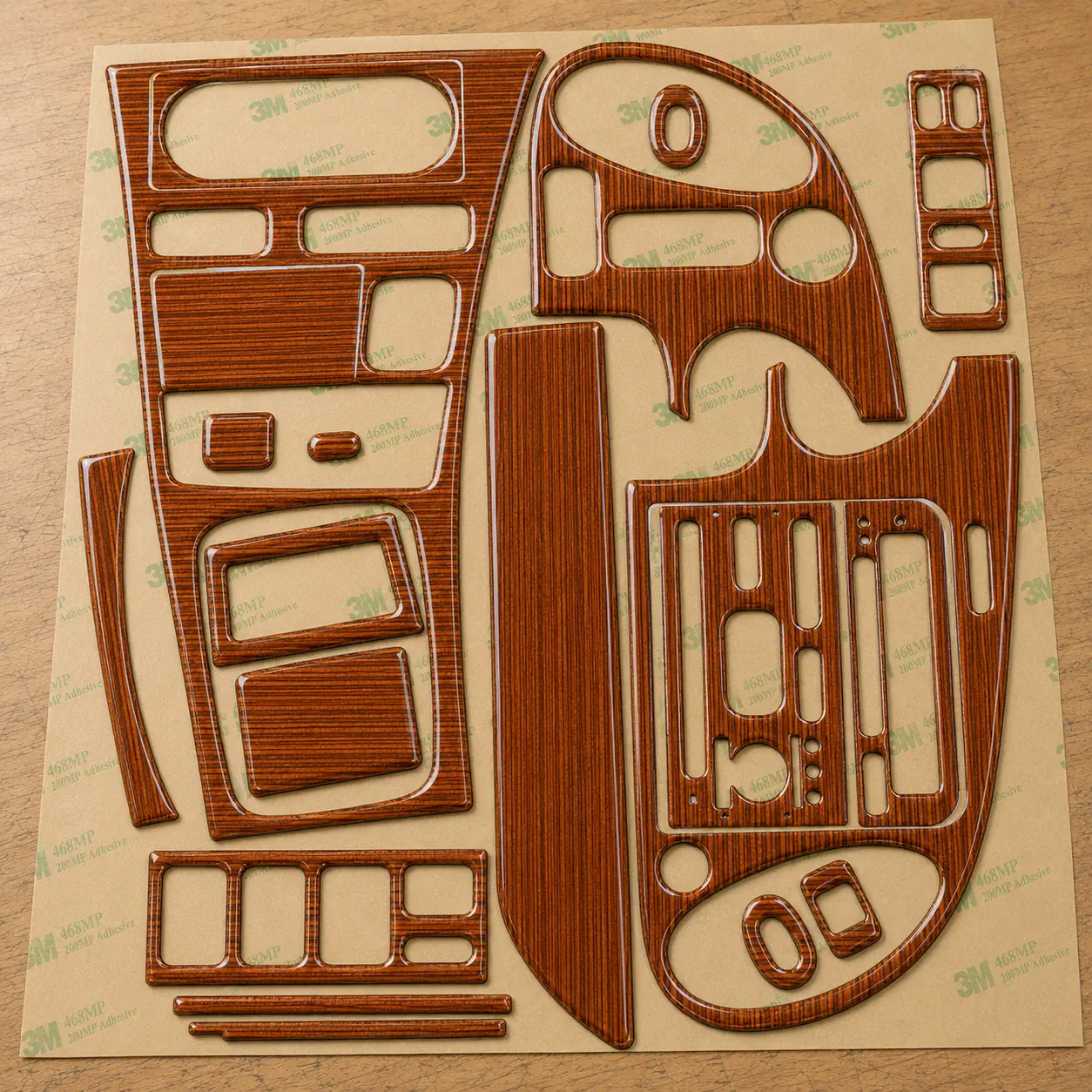
Striped wood finish
Dashboard Trim Material Overview
Dashboard trim kits are available in many styles, from classic wood finishes to modern carbon fibre, brushed aluminium, piano black, camo and strong solid colours. The correct material depends on the vehicle interior, the visual result you want and whether you prefer a luxury, sporty, technical or custom appearance.
| Material or finish | Best for | Visual effect |
|---|---|---|
| Burl wood | Luxury interiors, classic vehicles, executive cars, vans and trucks | Warm, premium, elegant and traditional |
| Dark walnut | Black, grey, beige and executive interiors | Deep luxury tone with a refined OEM-style look |
| Light burl wood | Light grey, beige, cream and classic interiors | Bright, warm and elegant wood appearance |
| Carbon fibre | Sporty interiors, performance cars and modern styling | Technical, dynamic and motorsport-inspired |
| Brushed aluminium | Modern cars, vans, trucks and clean technical interiors | Cool metallic, modern and precise |
| Piano black | Minimalist modern interiors | Clean, glossy and premium |
| Solid colours | Custom interiors and strong design themes | Bright, individual and highly visible |
| Camo or technical patterns | Off-road, utility, show car or custom builds | Specialised, bold and non-standard |
The material finish affects appearance, but it does not replace compatibility checking. Always choose the correct dashboard trim kit version for your vehicle make, model, year, gearbox type, air-conditioning controls, navigation system and dashboard layout.
Burl Wood Dashboard Trim vs Carbon Fibre Trim
Burl wood and carbon fibre are two of the most popular dashboard trim styles, but they create very different impressions inside the vehicle. Burl wood is chosen for warmth, luxury and classic interior styling. Carbon fibre is chosen for a sportier, more technical and performance-focused appearance.
Burl wood dashboard trim
Burl wood style trim is designed to give the dashboard a premium wood effect. It works especially well in executive cars, classic vehicles, motorhomes, vans, trucks and interiors where a warm high-gloss finish is preferred.
Main advantages of burl wood trim
- creates a premium luxury interior appearance
- matches classic and executive vehicle styling
- works well with black, grey, beige and cream interiors
- adds warmth to plain plastic dashboards
- available in dark, medium and light wood tones
- suits cars, vans, trucks, buses and motorhomes
Possible limitations of burl wood trim
- may look too traditional for very sporty interiors
- light wood tones can contrast strongly with black dashboards
- wood effect must be chosen carefully to match existing interior parts
- very large full sets can strongly change the cabin style
Carbon fibre dashboard trim
Carbon fibre style trim gives the dashboard a modern technical look. It is often chosen for sports cars, performance models, tuning projects and interiors where a dynamic, motorsport-inspired appearance is preferred.
Main advantages of carbon fibre trim
- creates a sporty and technical interior style
- works well with black, dark grey and modern dashboards
- matches performance and tuning themes
- available in black, blue, red, silver and other colour variations
- can make an older interior look more modern
- often pairs well with aluminium, black leather or sporty seats
Possible limitations of carbon fibre trim
- may look too sporty for classic luxury vehicles
- coloured carbon fibre can be very strong visually
- may not match existing factory wood trim
- large carbon fibre full sets can make the interior look more aggressive
Comparison table: burl wood vs carbon fibre
| Comparison point | Burl wood trim | Carbon fibre trim |
|---|---|---|
| Interior style | Luxury, classic, warm, executive | Sporty, technical, modern, performance |
| Best dashboard colours | Black, grey, beige, cream, brown | Black, dark grey, silver, red accents |
| Best vehicle types | Executive cars, classic cars, vans, trucks, motorhomes | Sports cars, tuning projects, performance models |
| Visual warmth | High | Low to medium |
| Technical appearance | Medium | High |
| Classic OEM-style look | Very strong | Moderate, depending on vehicle |
| Custom colour impact | Natural and decorative | Strong and dynamic |
When to choose burl wood
- You want a luxury dashboard appearance.
- Your vehicle has a classic or executive interior style.
- You prefer warm tones and natural-looking patterns.
- You want to upgrade plain black or grey plastic surfaces.
- You are styling a car, van, truck, bus or motorhome with a premium look.
When to choose carbon fibre
- You want a sportier interior.
- Your vehicle already has black, aluminium or performance-style details.
- You prefer a technical or motorsport-inspired finish.
- You want a modern alternative to wood effect trim.
- You are building a custom or tuning-style interior.
High-Gloss Polyurethane Doming for Dashboard Trim Kits
High-gloss polyurethane doming is a clear raised coating applied over the visible decorative surface of a dashboard trim part. It creates a smooth 3D effect, rounded edges and strong reflections. This finish is often described as 3D domed, deep gloss, high-gloss clear coat or polyurethane doming.
What polyurethane doming does
- adds a raised 3D surface effect
- creates rounded glossy edges
- increases visual depth
- makes wood, carbon and colour finishes appear richer
- creates a smooth premium surface
- helps protect the visible decorative layer from normal handling
Why 3D doming looks premium
The clear domed layer acts like a lens over the finish. On burl wood, it makes the grain look deeper and warmer. On carbon fibre, it enhances the technical pattern. On aluminium or colour finishes, it creates a glossy surface with clean reflections.
3D domed trim vs flat film
| Feature | 3D domed trim | Flat film or flat sticker |
|---|---|---|
| Surface appearance | Raised, glossy and rounded | Flat and thinner |
| Visual depth | High | Lower |
| Edge appearance | Rounded and finished | Flat edge |
| Luxury effect | Strong | Moderate |
| Handling feel | Smooth and thicker | Thin and film-like |
| Best for | Premium dashboard trim kits | Simple low-profile wrapping or temporary styling |
Benefits of high-gloss polyurethane doming
- luxury high-gloss appearance
- deep clear coat effect
- rounded 3D edge profile
- better visual depth than flat printed film
- suitable for wood, carbon, aluminium and colour finishes
- premium tactile feel
- strong showroom-style reflections
Important notes about domed surfaces
- Do not use abrasive pads on the glossy surface.
- Do not scratch the coating with metal tools.
- Do not bend small pieces aggressively before warming if the interior is cold.
- Clean fingerprints with a soft lint-free cloth.
- Avoid harsh solvents unless the product instructions confirm they are safe.
Real Wood Veneer vs UV Printed Wood Effect Trim
Wood-style dashboard trim can be produced in different ways. Two common approaches are real wood veneer and UV printed wood effect. Both can be finished with a high-gloss 3D domed clear coat, but they have different advantages.
Real wood veneer dashboard trim
Real wood veneer uses a genuine wood surface layer. This gives a natural grain structure and a premium material feel. Each wood pattern can have natural variation, which is often valued in luxury interiors.
Advantages of real wood veneer
- natural wood material
- premium authentic appearance
- unique grain variation
- excellent for luxury and classic interiors
- ideal for executive cars, prestige vehicles and motorhomes
- can create a very high-end cabin effect when domed and polished
Possible limitations of real wood veneer
- natural grain can vary from part to part
- matching large full sets requires careful grain and colour selection
- production may be more complex than printed finishes
- cost is usually higher than standard printed effect trim
- some exotic wood tones may be less repeatable between batches
UV printed wood effect dashboard trim
UV printed wood effect trim uses a printed decorative pattern that imitates wood. It is useful when consistent repeatability, strong colour control or a specific design is required. It can also reproduce patterns that are difficult or expensive to achieve with real veneer.
Advantages of UV printed wood effect trim
- consistent pattern and colour control
- good repeatability between production batches
- wide range of wood, carbon, aluminium and custom patterns
- can reproduce rare or stylised wood effects
- often easier for large catalog production
- works well under 3D domed clear coat
Possible limitations of UV printed wood effect trim
- not a natural wood material
- grain does not have the same organic variation as real veneer
- premium effect depends strongly on print quality and clear coat finish
- may look less authentic if the pattern resolution or colour is poor
Real wood veneer vs UV printed wood effect comparison
| Comparison point | Real wood veneer | UV printed wood effect |
|---|---|---|
| Material | Genuine wood surface layer | Printed decorative wood pattern |
| Pattern variation | Natural variation | Controlled and repeatable |
| Luxury authenticity | Very high | High if print and doming quality are strong |
| Batch consistency | Can vary naturally | More consistent |
| Design flexibility | Limited by available veneer | Very flexible |
| Best for | Premium, classic and natural luxury interiors | Large catalog, custom patterns and repeatable finish options |
| 3D domed compatibility | Excellent | Excellent |
Which one should you choose?
- Choose real wood veneer if you want the most authentic natural luxury appearance.
- Choose UV printed wood effect if you want consistent colour, repeatability and many finish options.
- Choose a 3D domed finish if you want extra gloss, depth and a premium raised surface.
- Choose the finish based on the interior style, not only the material name.
Dark Walnut, Light Burl Wood and Aluminium Interior Trim Comparison
Dark walnut, light burl wood and aluminium are three very different interior trim styles. Each one changes the cabin atmosphere in a different way.
Dark walnut interior trim
Dark walnut is a deep, elegant wood finish. It is suitable for vehicles where the goal is a premium executive look. It works especially well with black, dark grey, beige and cream interiors.
Best uses for dark walnut
- executive cars
- classic luxury vehicles
- black leather interiors
- grey or beige dashboards
- motorhomes and vans with premium interior conversions
- trucks where a warm luxury cockpit style is desired
Light burl wood interior trim
Light burl wood creates a brighter, warmer cabin appearance. It is a good choice when the dashboard or seats are light grey, beige, cream or tan. It can make the interior feel more open and less heavy than dark wood.
Best uses for light burl wood
- beige and cream interiors
- classic cars with lighter upholstery
- grey dashboards that need warmth
- luxury vans and motorhomes
- interiors where dark wood would look too heavy
Aluminium interior trim
Aluminium trim creates a clean, technical and modern look. It is less warm than wood but can make the dashboard look more precise, fresh and contemporary. It works especially well in modern cars, vans and trucks with black or grey interiors.
Best uses for aluminium trim
- modern vehicle interiors
- black and dark grey dashboards
- technical or OEM-style cabin design
- sporty but not aggressive interiors
- commercial vehicles where a clean professional look is preferred
Comparison table: dark walnut vs light burl wood vs aluminium
| Feature | Dark walnut | Light burl wood | Aluminium |
|---|---|---|---|
| Style | Executive luxury | Bright classic luxury | Modern technical |
| Visual warmth | High | Very high | Low to medium |
| Best interior colours | Black, grey, beige, cream | Beige, cream, light grey, tan | Black, grey, silver, dark interiors |
| Best vehicle type | Executive car, van, truck, motorhome | Classic car, luxury van, beige interior vehicle | Modern car, van, truck, technical interior |
| Luxury impression | Very strong | Strong and bright | Modern premium |
| Sporty impression | Low to medium | Low | Medium |
| Best for full sets | Yes, if luxury effect is desired | Yes, especially with light interiors | Yes, for modern clean styling |
Popular Finish Options for Dashboard Trim Kits
Depending on the product line, dashboard trim kits can be offered in many finish styles. The finish name should always be matched with product images, sample swatches or preview pictures before ordering.
Wood and burl wood style finishes
- Dark Burl Wood
- Medium Burl Wood
- Light Burl Wood
- Classic Walnut
- Dark Walnut
- Light Oak
- Exotic Burl
- Executive Burl Hybrid
- Golden Birdseye Burl
- Honey Burl
- Japanese Elm
- Figured Cedar
- Cinnamon Mottled Eucalyptus
- Macassar Ebony
- Zebra Wood
- Monaco Walnut
- Natural Makassar
- Black Birdseye Maple
Carbon fibre style finishes
- Black Carbon Fibre
- Blue Carbon Fibre
- Red Carbon Fibre
- Silver Carbon Fibre
Solid colour and technical finishes
- Coal Black
- Racing Red
- Deep Orange
- Sunray Yellow
- Blue
- Green
- Gold
- Grey metallic
- Camo
- Technical wrap patterns
Wood finishes are usually the safest choice for classic luxury styling. Carbon fibre is best for sporty interiors. Aluminium and metallic finishes are best for modern technical interiors. Strong colours are best for custom vehicles and show-style interior themes.
How to Choose a Finish by Interior Colour
The same material can look very different depending on dashboard colour, seat colour and existing trim details. Use the interior colour as a guide before choosing the finish.
| Interior colour | Recommended finishes | Effect |
|---|---|---|
| Black interior | Dark walnut, dark burl wood, carbon fibre, brushed aluminium, piano black | Premium, sporty or modern depending on finish |
| Dark grey interior | Dark walnut, medium burl wood, aluminium, black carbon fibre | Balanced and professional |
| Light grey interior | Light burl wood, light oak, aluminium, medium burl wood | Clean and brighter |
| Beige interior | Light burl wood, honey burl, walnut, golden birdseye burl | Warm luxury style |
| Cream interior | Light burl wood, light oak, golden wood tones | Classic premium look |
| Brown or tan interior | Walnut, dark walnut, medium burl wood, honey burl | Natural and coordinated |
| Sport interior | Carbon fibre, aluminium, piano black, red carbon fibre | Dynamic and technical |
How to Choose a Finish by Vehicle Style
Executive cars
Executive cars usually look best with dark walnut, medium burl wood, exotic burl, piano black or aluminium. Dark wood gives a classic luxury effect, while aluminium gives a more modern premium effect.
Classic cars
Classic cars often suit burl wood, walnut, light oak and other warm wood finishes. A high-gloss domed wood surface can help recreate a traditional luxury interior style.
Sports cars
Sports cars usually suit carbon fibre, brushed aluminium, piano black or darker technical finishes. These finishes match black leather, bucket seats, sporty dashboards and performance styling.
Vans and motorhomes
Vans and motorhomes can benefit from burl wood, walnut, light burl wood or aluminium. Wood finishes create a warmer living-space atmosphere, while aluminium creates a clean commercial or modern conversion style.
Trucks and buses
Truck and bus interiors often have large dashboard areas. Dark burl wood, walnut and aluminium are strong choices because they visually upgrade plain interior panels. For large full sets, choose a finish that will not look too aggressive across the whole cockpit.
Custom and show vehicles
For custom builds, strong colours, camo, carbon fibre and technical patterns can create a more individual look. These finishes are more visible and should be chosen carefully if the vehicle is used for daily driving.
Care and Cleaning for High-Gloss Trim Surfaces
High-gloss 3D domed trim surfaces should be cleaned gently. The surface is designed for interior use, but aggressive tools or harsh chemicals can damage the gloss.
Recommended cleaning method
- Use a clean soft lint-free cloth.
- Remove fingerprints with gentle wiping.
- Use a mild glass cleaner only if suitable for the product surface.
- Apply cleaner to the cloth, not directly into dashboard buttons or electronics.
- Avoid abrasive pads, sharp tools and strong solvents.
Cleaning products to avoid
- abrasive polishing compounds
- rough sponges or scouring pads
- strong industrial solvents
- acetone on unknown plastic or coated surfaces
- silicone dressings on bonding areas before installation
- excessive liquid around switches and electronics
After installation
After installing a dashboard trim kit, avoid heavy cleaning, lifting edges or stressing curved parts during the first 24 to 72 hours. This helps the adhesive bond develop properly and reduces the risk of edge lifting.
Final Material Selection Checklist
Before choosing the material or finish for your dashboard trim kit, use this checklist.
Style checklist
- Do you want a luxury, sporty, technical or custom look?
- Does the finish match the dashboard colour?
- Does the finish match the seats, door panels and existing interior trim?
- Will the finish look good across a full set, not only on one small part?
- Do you prefer natural-looking wood grain or a controlled printed pattern?
- Do you want a high-gloss 3D domed surface?
- Do you want a classic OEM-style appearance or a strong custom appearance?
Material checklist
- Choose burl wood if you want warmth and luxury.
- Choose dark walnut if you want a deep executive look.
- Choose light burl wood if the interior is beige, cream or light grey.
- Choose carbon fibre if you want a sporty technical look.
- Choose aluminium if you want a modern clean dashboard style.
- Choose piano black if you want a minimalist glossy finish.
- Choose strong colours only if you want a visible custom interior theme.
Compatibility checklist
- Check vehicle make and model.
- Check production year and generation.
- Check facelift or pre-facelift dashboard version.
- Check automatic or manual gearbox.
- Check manual AC, automatic AC or no AC.
- Check navigation, radio and screen layout.
- Check heated seat buttons and switch locations.
- Check product diagram and number of trim pieces.
- Check that the selected material is available for the correct kit reference.
Frequently Asked Questions
Is burl wood better than carbon fibre for dashboard trim?
Neither is universally better. Burl wood is better for a luxury, classic or executive look. Carbon fibre is better for a sporty, technical or performance-inspired look. The best choice depends on your vehicle interior and the style you want.
What is 3D domed dashboard trim?
3D domed dashboard trim has a raised high-gloss clear coating over the decorative surface. This creates depth, rounded edges and a premium glossy appearance.
Is real wood veneer better than UV printed wood effect?
Real wood veneer is better if you want a genuine natural wood surface and unique grain variation. UV printed wood effect is better if you want consistent colour, repeatable patterns and more design flexibility.
Can UV printed wood effect still look premium?
Yes. A high-quality printed wood pattern combined with a glossy 3D domed clear coat can create a strong premium appearance, especially when the colour and grain are well matched to the vehicle interior.
Which finish is best for a black dashboard?
Dark walnut, dark burl wood, black carbon fibre, brushed aluminium and piano black usually work well with black dashboards. Choose wood for luxury, carbon for sport and aluminium for a modern technical look.
Which finish is best for a beige interior?
Light burl wood, honey burl, golden birdseye burl, light oak and walnut are usually good choices for beige or cream interiors because they add warmth without looking too heavy.
Is aluminium trim suitable for luxury vehicles?
Yes. Aluminium trim can create a modern premium appearance. It is less traditional than wood but works very well in clean, technical and contemporary interiors.
Can I mix wood and carbon fibre finishes?
It is usually better to keep one main finish across the interior. Mixing wood and carbon fibre can look inconsistent unless it is part of a deliberate custom design.
Does the finish affect installation?
The installation process is generally similar, but the shape of the kit, number of parts and dashboard layout affect installation time more than the finish itself. Always dry fit the parts before applying them.
Can I clean high-gloss domed trim with normal dashboard cleaner?
Use caution. Many dashboard cleaners leave residue or silicone. For the glossy trim surface, use a soft lint-free cloth and a mild cleaner suitable for glossy interior surfaces. Do not use abrasive products.
Important Compatibility Note
Material and finish selection is separate from vehicle compatibility. Always confirm that the dashboard trim kit matches your exact vehicle make, model, year, dashboard layout and equipment version before ordering or installation.
Vehicle manufacturer names and model names are used only for compatibility identification. The dashboard trim kit is an aftermarket interior accessory and is not presented as an original vehicle manufacturer product.